
5 working days
Standard turnaround from sample receipt
NABL TC-5843
Accredited to ISO/IEC 17025:2017
ICP-OES and AAS
Primary technique on this service
14,000 sq. ft.
Integrated laboratory in Jaipur
This service covers two different questions about the same material: what a soil can grow, and what a soil or aggregate can carry. Nutrient and salinity work sits alongside contamination screening and the mechanical tests construction specifications call for.
Issuing soil health recommendations to farmers or an FPO
Site investigation before construction or a land purchase
Qualifying aggregate, sub-base or fill against an IS specification
Assessing suspected contamination from industry or a spill
What we test on this service
Panels are built from the list below. Tell us the market and the specification and we select the parameters it calls for rather than selling you the whole sheet.
pH, electrical conductivity, organic carbon, NPK
Micronutrients: zinc, iron, manganese, copper, boron
Heavy metals and petroleum hydrocarbons
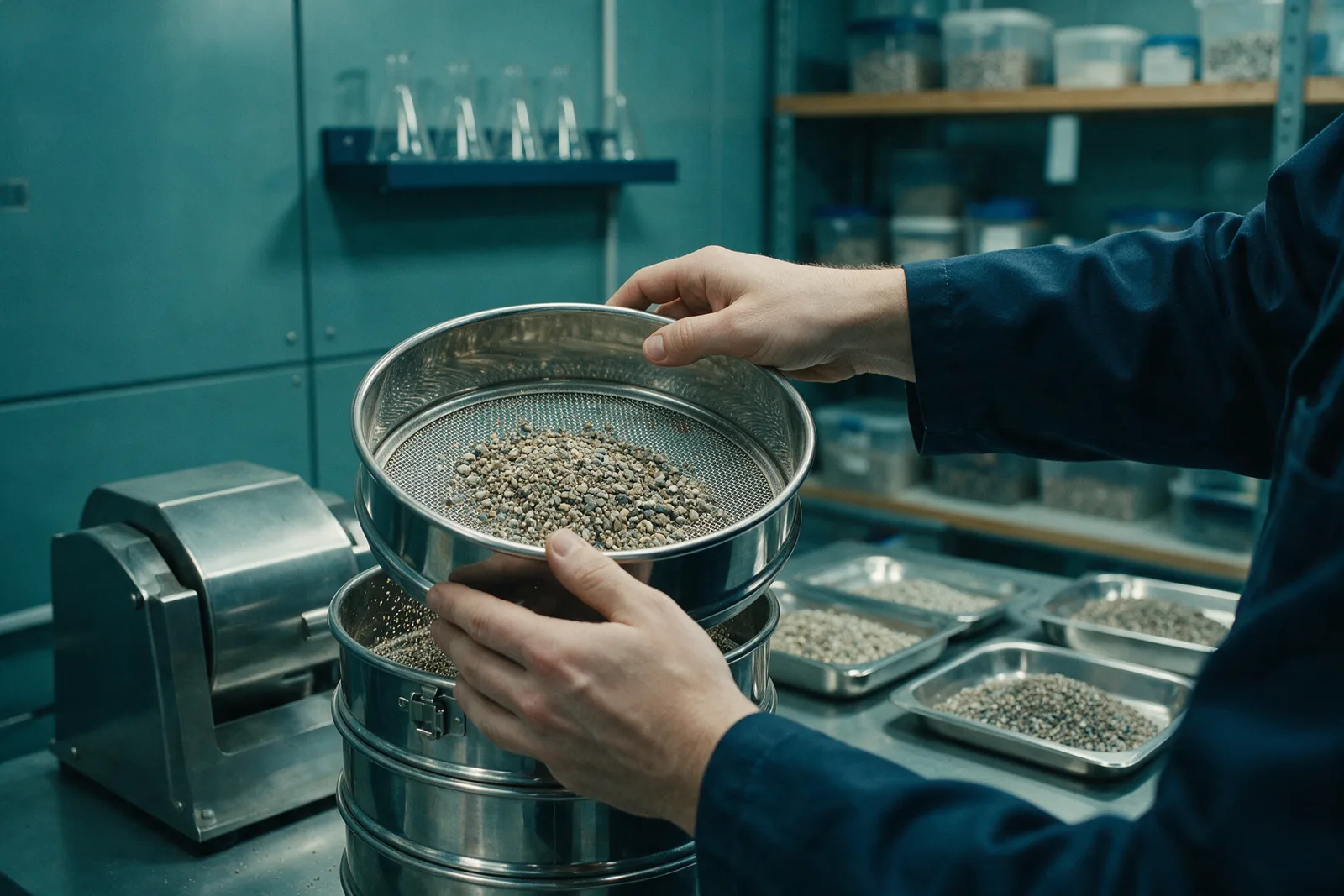
Particle size, Atterberg limits, Proctor density
Aggregate impact, crushing and abrasion values
Sulphate, chloride and free swell index
Method
How the analysis runs
Instrumentation and controls
Every batch runs with the controls its method requires, on calibrated equipment, and a second analyst reviews the data before the report is released.
Standards and methods
Results are reported against the method below, or against your buyer's specification where you send one with the sample.
Ask for the full NABL scope document if you need to confirm accredited coverage before sending the sample.
Not sure which parameters your buyer wants?
Send us the specification. We will tell you what to test and what it costs, at no charge.
The approvals this work is issued under
Reported under NABL TC-5843. Construction material results are issued against the relevant IS specification for third-party acceptance.
Before you send it
1 kg of soil from 0 to 15 cm depth for agricultural panels, 5 kg of aggregate or rock for mechanical tests. Air dry soil before packing and label the location.
5 working days for soil health panels, 7 to 10 working days for contamination and mechanical testing.
Agri input companies and FPOs
Infrastructure contractors and consultants
Mining and quarry operators
Real estate due diligence teams
Send a sample
Fill in the Test Request Form, pack the sample as described above and courier it to the Jaipur laboratory. Call us first if the sample is perishable.
Get the TRFRelated queries
Questions we get asked
Can you assess land before purchase?
Yes. A contamination screen covering heavy metals, hydrocarbons and salinity gives you a defensible baseline before you commit.
How deep should an agricultural sample be taken?
Zero to fifteen centimetres for most field crops, and a separate fifteen to thirty centimetre sample for orchards and deep rooted crops.
Can you test a composite from a whole field?
Yes, for soil health work. For contamination assessment we need discrete samples with recorded locations.
Do you carry out on-site field density testing?
Yes, core cutter and sand replacement density work is done on site with the laboratory confirmation to follow.
Request a quote
Tell us what you need tested
Send the product, the market it ships to and the standard you are being held to. Our technical team replies with the parameter list, the sample quantity we need and a firm turnaround. Quotes usually go out the same working day.
+91-9950229764 / +91-9634063932
Sample receipt: Monday to Saturday, 9:30 am to 6:00 pm