
7 to 10 working days
Standard turnaround from sample receipt
NABL TC-5843
Accredited to ISO/IEC 17025:2017
LC-MS/MS triple quadrupole
Primary technique on this service
14,000 sq. ft.
Integrated laboratory in Jaipur
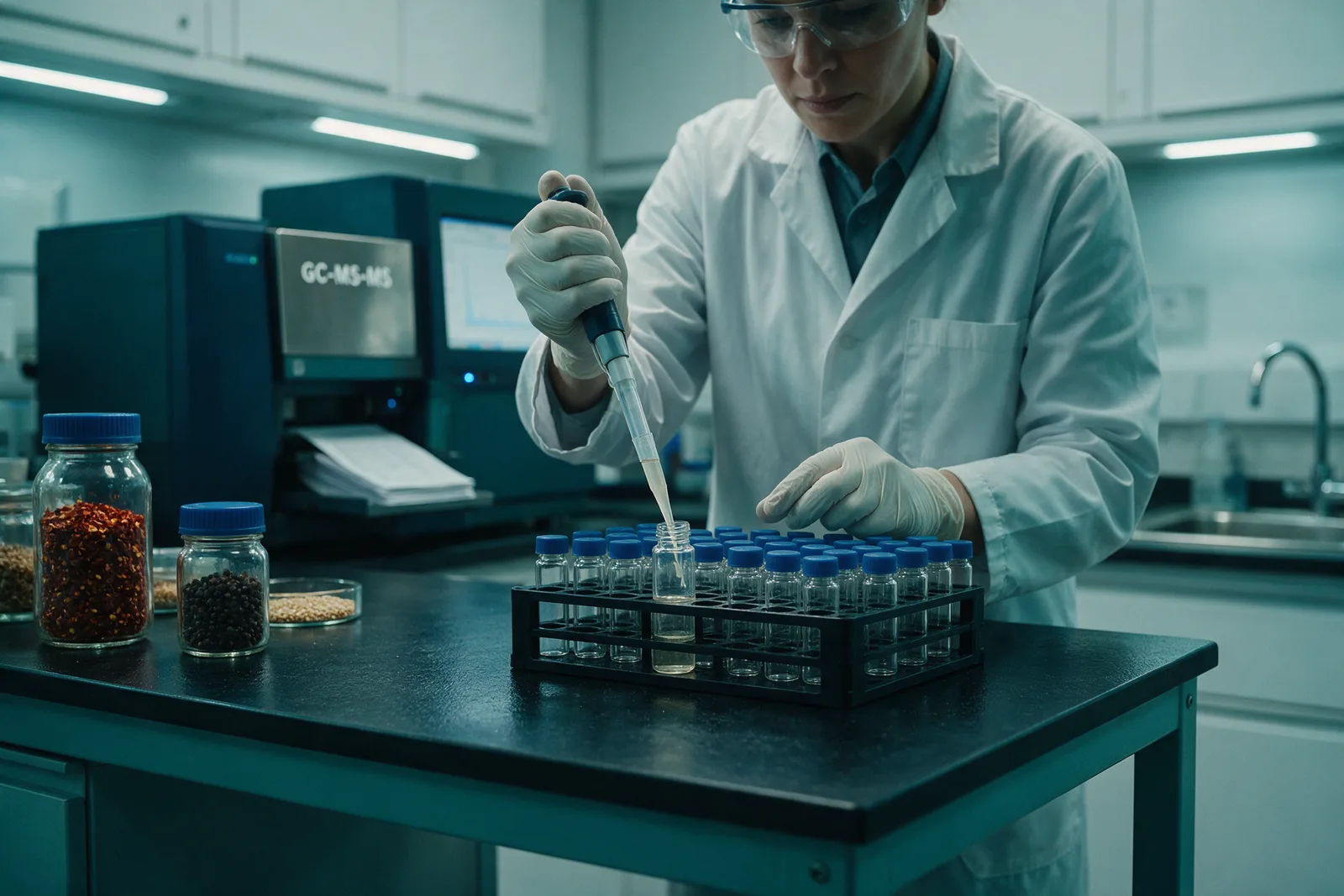
This service looks for chemicals that should not be in the food at all, or only in trace amounts: pesticide residues left from cultivation, veterinary drugs carried through from livestock, mycotoxins produced by mould, and heavy metals picked up from soil or processing. Detection runs at parts per billion, because that is where export limits sit.
Shipping to the EU, US, Japan or Gulf markets with MRL conditions
A buyer has asked for a specific residue panel before releasing payment
A consignment has been held or rejected and you need evidence
Sourcing from new farms or regions with unknown spray practice
What we test on this service
Panels are built from the list below. Tell us the market and the specification and we select the parameters it calls for rather than selling you the whole sheet.
Multi-residue pesticide panels, over 300 analytes
Antibiotic and veterinary drug residues in milk, honey, meat and fish
Aflatoxin B1, B2, G1, G2, M1, ochratoxin A, DON, zearalenone, fumonisins
Heavy metals at ppb level
Ethylene oxide, chlorate and perchlorate
Melamine, sudan dyes and other adulterants
Method
How the analysis runs
Instrumentation and controls
Every batch runs with the controls its method requires, on calibrated equipment, and a second analyst reviews the data before the report is released.
Standards and methods
Results are reported against the method below, or against your buyer's specification where you send one with the sample.
Ask for the full NABL scope document if you need to confirm accredited coverage before sending the sample.
Not sure which parameters your buyer wants?
Send us the specification. We will tell you what to test and what it costs, at no charge.
The approvals this work is issued under
Residue scopes are covered under NABL TC-5843 and our Export Inspection Council approval. Spice Board, Tea Board and IOPEPC empanelment applies to those commodity groups.
Before you send it
1 kg of the commodity as received, undisturbed. Do not wash or decant. Honey and oils need 500 ml. Dispatch chilled samples in an insulated box with gel packs.
7 to 10 working days for a full multi-residue panel. 5 working days for a single mycotoxin or metals panel.
Spice, tea, rice and oilseed exporters
Dairy and honey processors
Importers facing border rejection risk
Contract farming and sourcing teams
Send a sample
Fill in the Test Request Form, pack the sample as described above and courier it to the Jaipur laboratory. Call us first if the sample is perishable.
Get the TRFRelated queries
Questions we get asked
Will an EU MRL panel report help at the border?
It gives your buyer and the inspecting authority a NABL-accredited result at EU detection limits. It does not replace the phytosanitary certificate.
How low can you detect?
Most pesticides down to 0.01 mg/kg, aflatoxin B1 to 0.5 ug/kg, heavy metals to single-digit ppb.
Which pesticide panel does my buyer actually need?
Send us their specification or the destination market. A full multi-residue screen is the safe answer, but a targeted panel of 40 to 60 analytes is often enough and costs less.
Can you test a retained sample after a rejection?
Yes, if it was stored sealed and refrigerated. Tell us the storage history and we will say whether the result will stand up.
How do I avoid cross-contamination when drawing the sample?
Use clean gloves, a clean scoop and a new bag for each sub-lot. Do not use bags that held treated seed or fertiliser.
Request a quote
Tell us what you need tested
Send the product, the market it ships to and the standard you are being held to. Our technical team replies with the parameter list, the sample quantity we need and a firm turnaround. Quotes usually go out the same working day.
+91-9950229764 / +91-9634063932
Sample receipt: Monday to Saturday, 9:30 am to 6:00 pm