
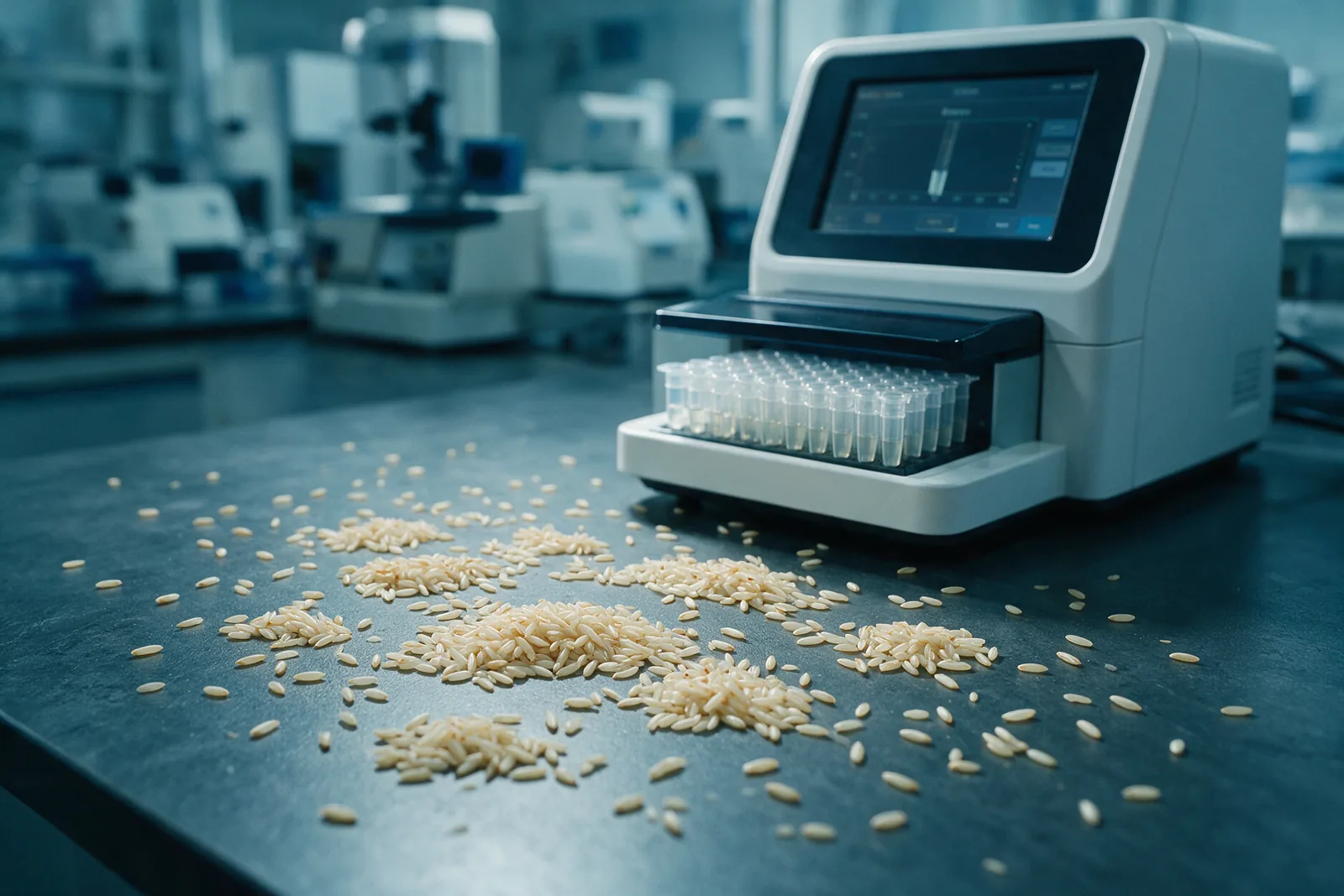
Basmati DNA purity testing is now running in the molecular biology suite at the Jaipur laboratory, approved by APEDA for export documentation. The method reports the percentage of non-basmati and admixture varieties in a lot using DNA markers rather than grain morphology.
Why DNA rather than visual inspection
Visual and physical grading can separate long grain from short, but it cannot reliably distinguish a basmati variety from a similar-looking non-basmati one, and it cannot quantify admixture at the level export contracts specify. DNA marker analysis can, and the result is a number rather than an opinion.
What the report gives you
- Percentage of the declared basmati variety in the lot
- Percentage of non-basmati admixture, quantified
- Identification of the specific varieties present where they are in the reference set
- A format accepted by APEDA and by overseas buyers for contract settlement
Sample requirement
250 g of milled or paddy rice drawn across the lot, sealed, with the variety declaration and the lot reference. Turnaround is five to seven working days.
The same suite also covers GMO screening, meat and fish species identification and probiotic strain confirmation.