
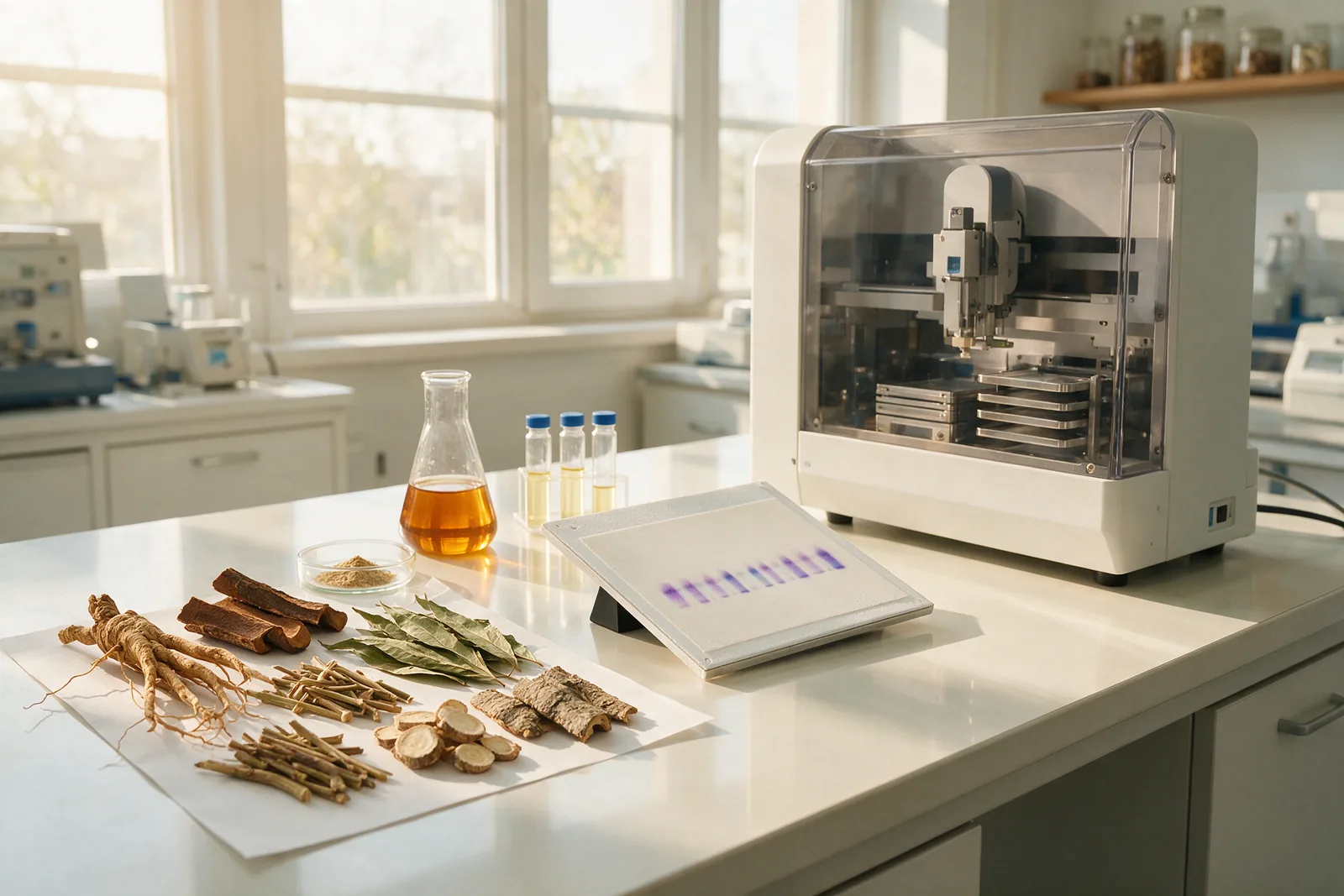
When lead or arsenic turns up in a finished churna, the first instinct is to audit the manufacturing line. In our experience that is rarely where it came from. Heavy metals arrive with the crude drug, and the crude drug takes them up from the soil it grew in or the water it was irrigated with.
Where the metals actually come from
Roots and rhizomes concentrate what is in the soil. Leafy material picks up roadside deposition. Some traditional formulations legitimately contain mineral ingredients, and the challenge there is distinguishing a declared bhasma from contamination.
- Growing soil, particularly near industrial estates or old mining land
- Irrigation water drawn from a contaminated aquifer
- Drying on open ground beside a road
- Grinding equipment with worn metal contact surfaces
Test the incoming material, not the outgoing batch
By the time a metal is in the finished product it is in every unit of the batch, and the only options left are recall or disposal. A heavy metal screen on each incoming lot of crude drug costs a fraction of that, and it identifies the supplier who needs a conversation.
What the pharmacopoeia expects
The Ayurvedic Pharmacopoeia of India sets limits for lead, cadmium, arsenic and mercury, and Rule 158B testing covers them. Export markets frequently apply tighter limits than the API does, so confirm the destination before you fix the specification.
We report all four by ICP-MS, with mercury on a dedicated analyser, down to single-digit parts per billion.